
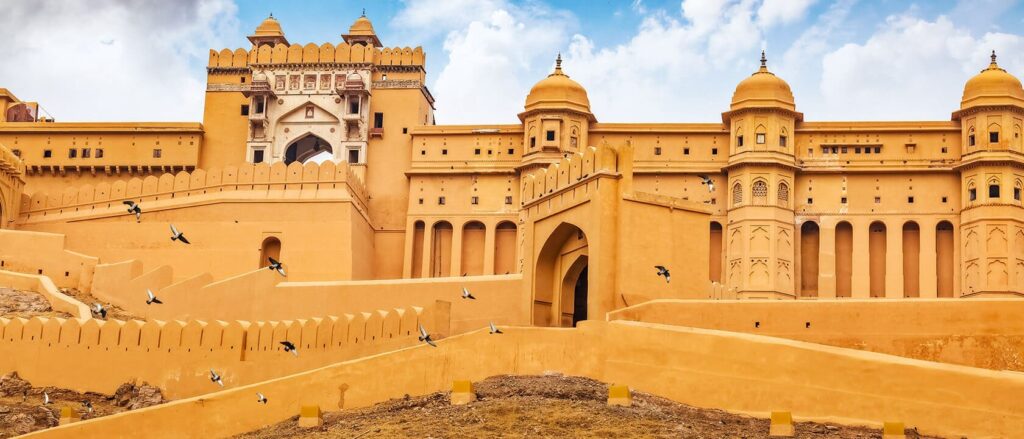
AMBER PALACE
Amber (pronounced Amer) is at a distance of about 11 kilometres from Jaipur. Now a UNESCO World Heritage Site, it was the bastion of the Kachwahas of Amber, until the capital was moved to the plains, to what is today Jaipur. The palace, located in craggy hills, is a beautiful melange of Hindu and Mughal styles. Raja Man Singh I began construction in 1592 and the palace, which was built as a strong, safe haven against attacking enemies, was completed by Mirja Raja Jai Singh. The contrast between the harsh exterior and the inviting interior couldn’t be more surprising. Made entirely of red sandstone and white marble, visitors are left spellbound by the magnificence of the palace that utilises carvings, precious stones and mirrors. The splendour of the palace is enhanced by the breath-taking vista of the Maota Lake in front. The palace is nearly seven centuries old and has a legendary past. Originally a small structure that the Rajputs won from the Meena tribes, it was later transformed into the grand Amber Palace.
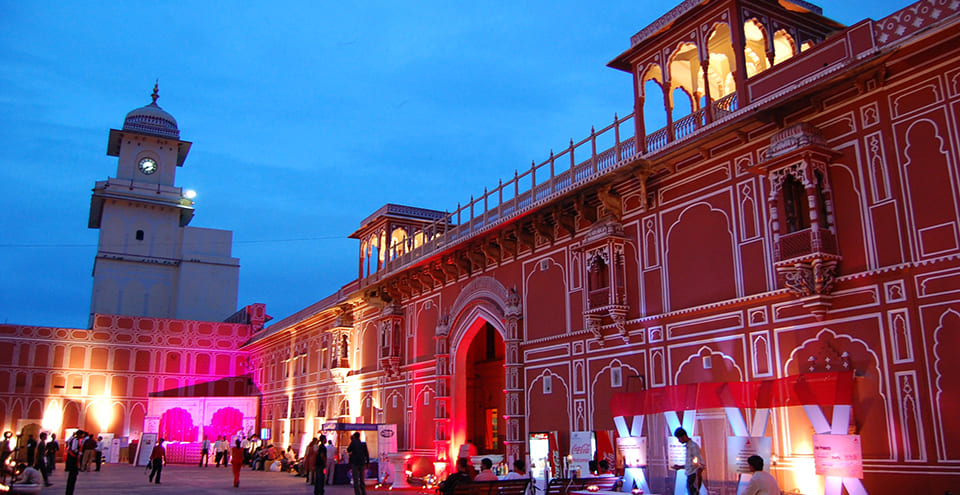
CITY PALACE
Located deep within the walled city, the City Palace Complex was conceived and built by Maharaja Sawai Jai Singh II, the founder of Jaipur. A beautiful fusion of Mughal and Rajput architecture, the palace is still home to the last ruling royal family which lives in a private section of the palace. Maharaja Sawai Jai Singh II is credited with building most of the structures, but it was expanded upon by later rulers as well. The City Palace Complex includes the Mubarak Mahal (the palace of reception) and the Maharani’s Palace (the palace of the queen). Mubarak Mahal now houses the Maharaja Sawai Man Singh II Museum and displays a vast and unique collection of royal costumes, delicate Pashmina (Kashmiri) shawls, Benaras silk saris, and other dresses with Sanganeri prints and folk embroidery. The clothes of Maharaja Sawai Madho Singh I are also on display. The Maharani’s Palace, surprisingly, has an interesting display of very well-preserved Rajput weaponry, some dating back to the 15th century. Other than the arms, the palace is adorned with beautiful paintings on the ceiling that are well-maintained.
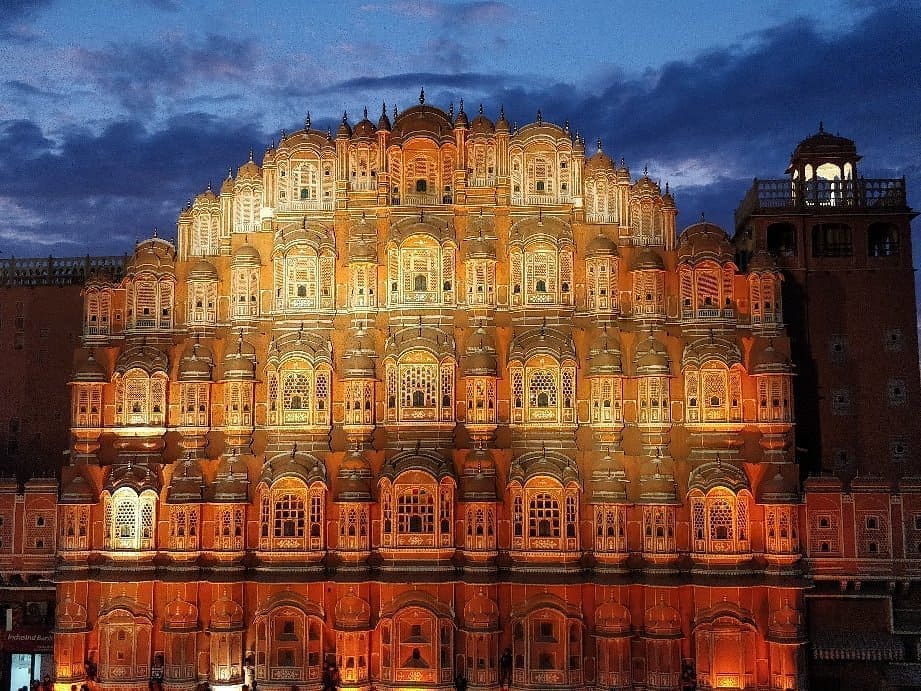
HAWA MAHAL
Hawa Mahal, literally the Palace of Winds, was built in 1799 by the poet king Sawai Pratap Singh as a summer retreat for him and his family. It also served as a place where the ladies of the royal household could observe everyday life without being seen themselves. This unique five-storey structure is a blend of Hindu and Islamic architecture, and the exterior, with its small latticed windows (called jharokhas), resembles the crown of Lord Krishna. The windows also serve as an air-conditioner of sorts, blowing cool air throughout the palace, making it the perfect retreat during summers. Built from pink sandstone, the Hawa Mahal is Jaipur’s iconic landmark and visitors can view its complete magnificence from outside, from across the road. However, it is also possible to climb right up to the top for a wonderful view from the windows. Today, the Mahal is maintained by the Archaeological Department of the Government of Rajasthan and also houses an archaeological museum in the courtyard.
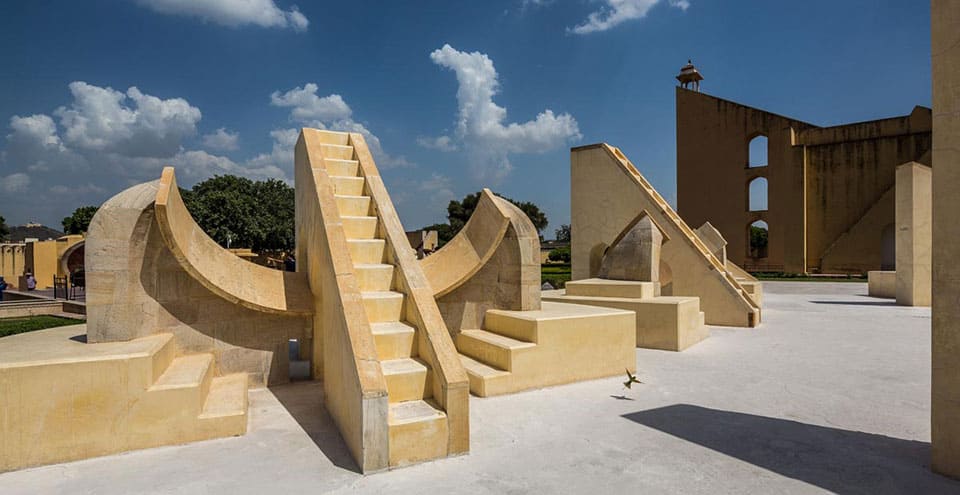
JANTAR MANTAR
Now a UNESCO World Heritage Site, Jantar Mantar in Jaipur is considered to be the largest of the five astronomical observatories built by Maharaja Sawai Jai Singh II, the founder of Jaipur. It contains sixteen geometric devices, designed to measure time, track celestial bodies and observe the orbits of the planets around the sun. It also houses the Interpretation Centre that helps the tourists to understand about the working principles & chronolgy of the observatory.
NAHARGARH FORT
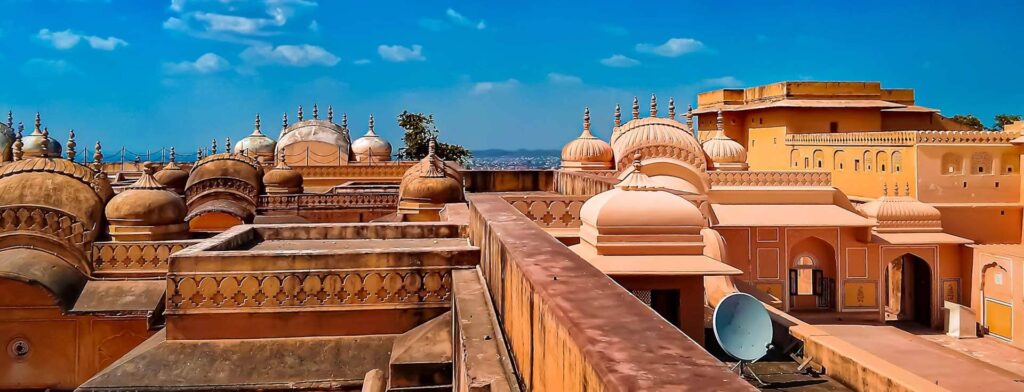
Nahargarh Fort sits proudly on a ridge of the Aravalli Hills, creating an impressive northern backdrop to the city of Jaipur. It was constructed during the reign of Jai Singh in 1734, and was later expanded in 1868. Nahargarh, which means abode of tigers, was a formidable barrier, defending Jaipur against attacking enemies. Within its walls, the fort houses Madhavendra Bhawan, the summer destination for the members of the royal family. Built by Sawai Madho Singh, the palace has 12 matching boudoirs for the queens, at the head of which is a suite for the king. They are all connected by corridors decorated with delicate murals. Even today the palace is a favoured spot for local picnickers. The fort looks brilliant when floodlit at night. Overlooking the city, it presents a glittering view of the city lights
ALBERT HALL MUSEUM (CENTRAL MUSEUM)
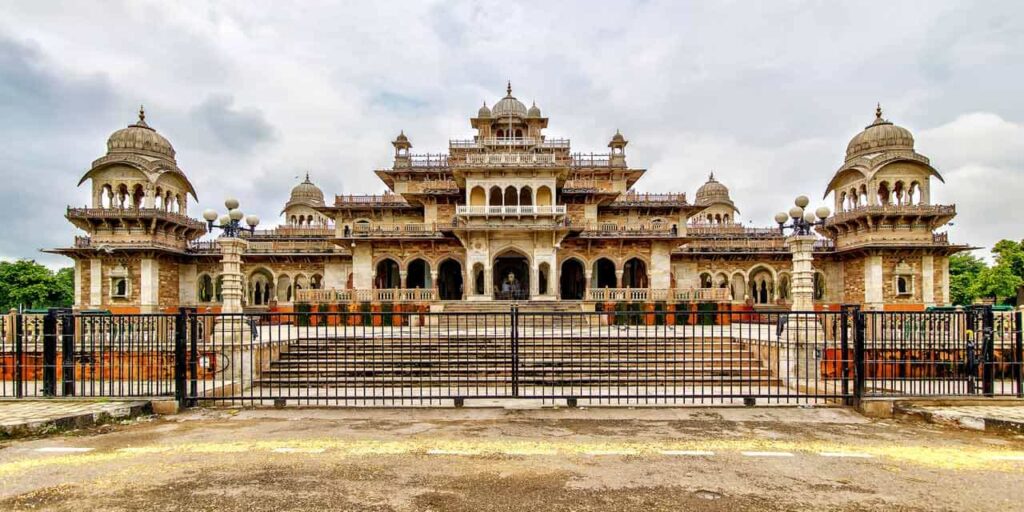
The building gets its name from The Victoria and Albert Museum in London, the inspiration for its design. The exquisitely built Albert Hall is housed in the centre of Ram Niwas Garden. Sir Swinton Jacob (who is also the mastermind behind many other palaces in Rajasthan) conceptualised and designed it using styles from the Indo-Sarcenic architecture and the Prince of Wales laid the foundation stone of the building in 1876. The museum displays a wide range of metal objects, wood crafts, carpets, stone and metal sculptures, arms and weapons, natural stones and ivory goods. It also houses a large collection of miniatures from Bundi, Kota, Kishangarh, Udaipur and Jaipur schools of art.
JAIGARH FORT
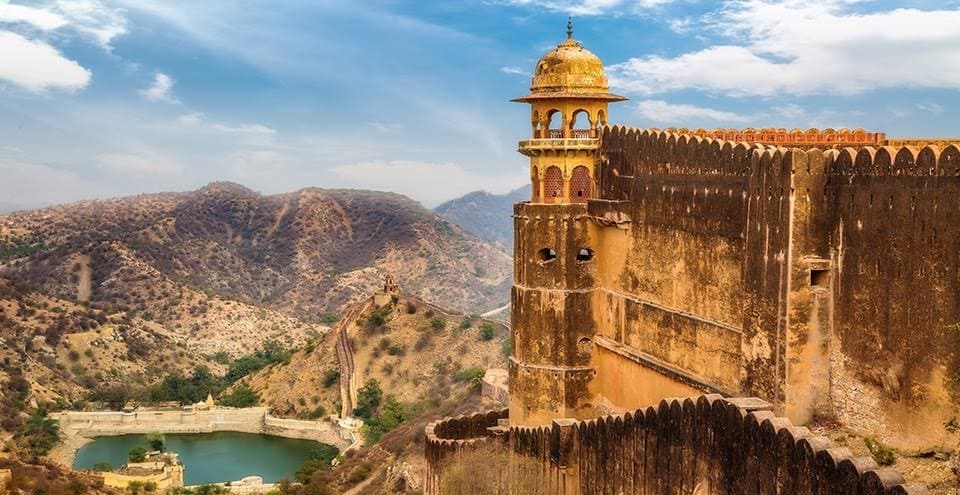
About 15 kilometres from Jaipur, Jaigarh Fort was built by Sawai Jai Singh II sometime in the early 18th century amidst the arid, rocky and thorn-scrub covered hills. Despite its ancient construction, it still retains most of its imposing citadel appearance. Visitors can see the world’s largest cannon – Jaiban, at the fort.
JAL MAHAL
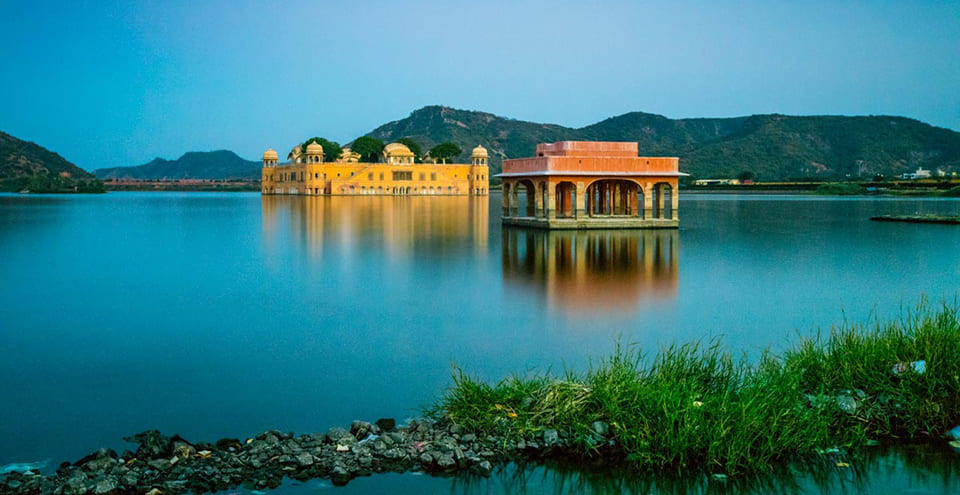
One of the most wonderful sights in Jaipur is the beautiful Jal Mahal or Lake Palace. The light, sand coloured stone walls and the deep blue of the water make for a wonderful contrast. The palace appears to float in the centre of Man Sagar Lake, where its magnificent exteriors can be enjoyed by touris
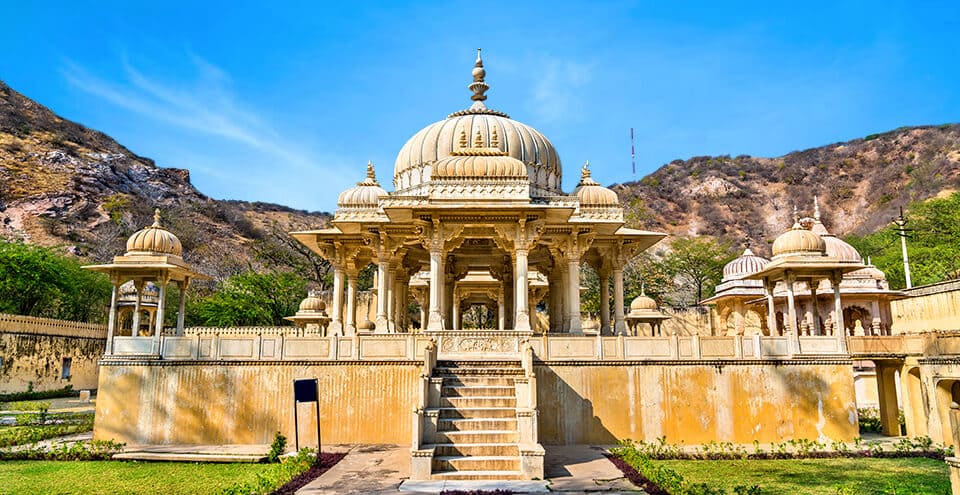
GAITORE (MEMORIALS OF KINGS)
Just off the Jaipur-Amber road is Gaitore, where the former Maharajas of Jaipur are entombed. The chhatris (cenotaphs), made of white marble display the distinctive Rajput style of architecture. The open pavilions with ornate domes are supported by delicately sculpted pillars. The crematorium is located in the middle of yellow sandstone hills. The décor and extravagance of a particular chattri is meant to reflect the stature and prowess of the ruler it contains. The most graceful and beautiful chattri at Gaitor is that of Maharaja Jai Singh with 20 carved pillars. Tourists are especially drawn towards it because of its intricate carvings.
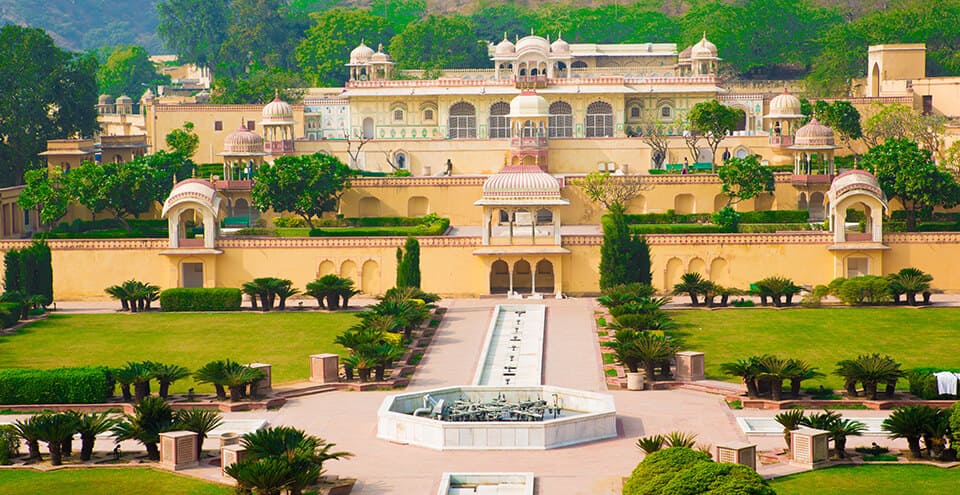
SISODIA RANI PALACE AND GARDEN
Sisodia Rani Palace and Garden is located 8 kilometres from Jaipur on the Agra road. Laid out in Mughal style, it is painted with the legends of Radha and Krishna. The garden is multi-tiered and has fountains, water courses and painted pavilions. Maharaja Sawai Jai Singh II built it for his Sisodia queen.
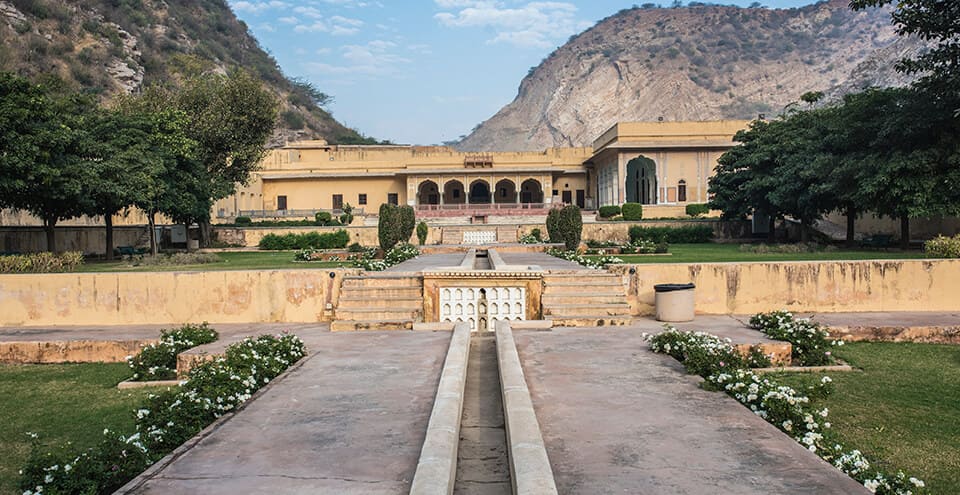
VIDYADHAR GARDEN
Located near Sisodia Garden, this is yet another beautiful garden which is a must-see for visitors. It is named after Vidyadhar Bhattacharya, the Chief Architect of Jaipur.
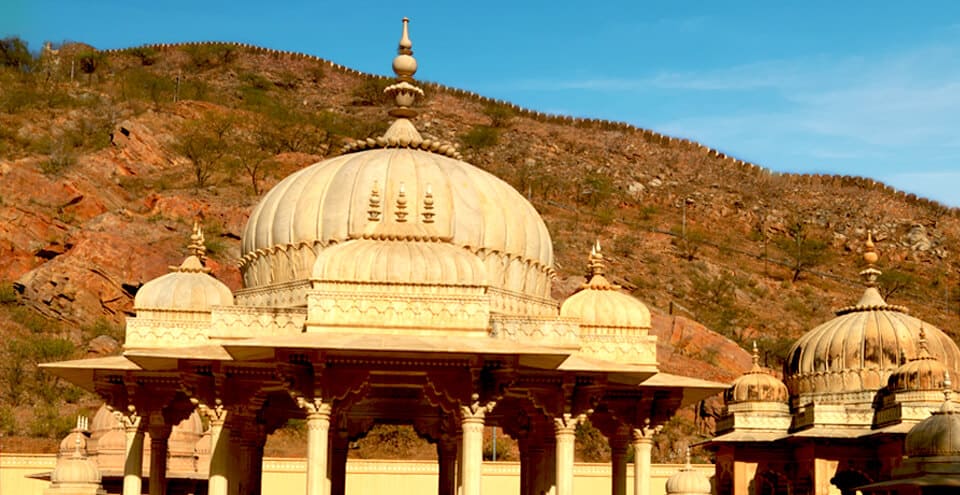
MAHARANI KI CHHATRI (MEMORIALS OF QUEENS)
Maharani Ki Chhatri was a special funeral area for women belonging to Jaipur’s royal family and is located on the way to Amber fort. This crematorium has several exquisitely carved cenotaphs built to commemorate them. The cenotaphs are either built with marble or the local stones. As a popular belief, a cenotaph was finished with a roof structure only if the queen died before her king. In case she died after the king, it would remain unfinished. One of the significant features of these cenotaphs is the use of chhatri (umbrella), a quintessential architectural style of the Rajputs.
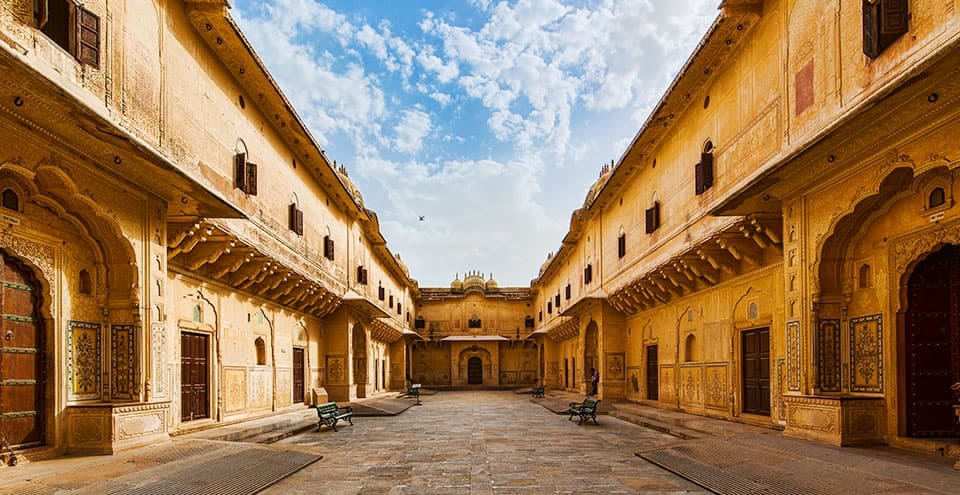
MADHVENDRA PALACE, NAHARGARH
One of the most popular tourist destinations in Jaipur, the Madhvendra Palace was built by Sawai Ram Singh for his nine queens. This double storied palace has nine apartments that are beautifully decorated with flower motifs and mesmerizing murals which elevate the spacious courtyard. Around 15 km from Jaipur city and at a height of 700 feet, this palace probably has the most splendid views of them all.The nine apartments of the queen surround three sides of the palace, while the fourth houses the Maharaja’s living room. With its magnificent views, awe-inspiring wall paintings, and the chance to peek into the heritage and culture of Rajasthan, the Madhvendra Palace more than lives up to its popularity.
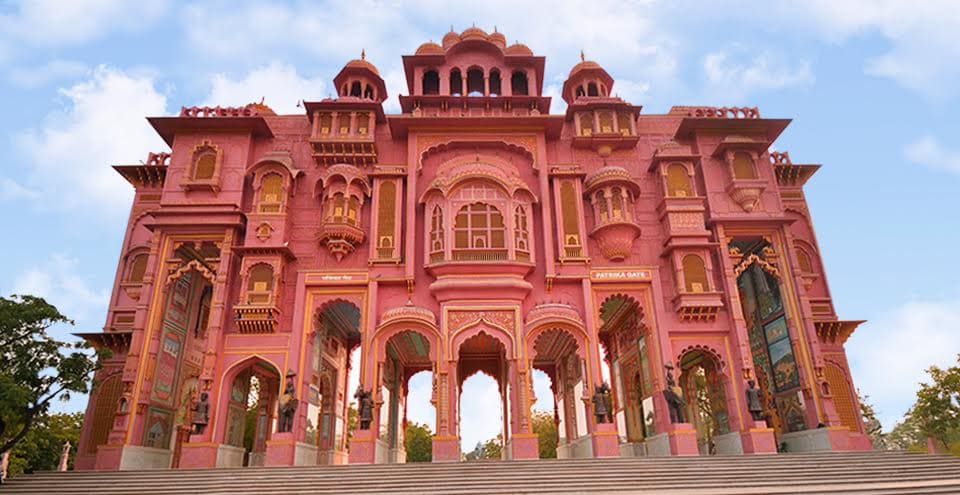
Jawahar Circle
Located near the Jawaharlal Nehru Marg in the Pink City, Jaipur, the Jawahar Circle is a unique destination for all kinds of visitors. Honored as the largest circular park in Asia, Jawahar Circle is encompassed by a rose garden and offers a number of concentric jogging tracks, benches, and lush greenery.While the beautifully landscaped plantations and green areas of the park are enough to leave a visitor awed, the main attraction of the park has definitely got to be the Musical Fountain. The fountain creates spectacular shows with over 270 types of effects and over 300 colorful lights. Sometimes, the height of the water of the musical fountain reaches up to 25 feet as well. While Jawahar Circle is a delight to be in to spend a day relaxing amidst nature, it gets even better in the evening hours. Artfully lit up, the musical fountain show is a 30-minute treat that begins at 7 in the evening, and is something that simply cannot be missed.